
For a long time, the basic formula was fairly straightforward: choose your keywords, optimise your website and try to move higher up Google.
That version of SEO is changing. People now search across Google, Instagram, TikTok, YouTube and AI platforms, often moving between several of them before they visit a website, book a ticket or enquire about an artwork.
For arts organisations, social media is no longer simply where you promote the content. It is increasingly where discovery begins.
Search is happening everywhere
Someone looking for an exhibition in London might start with Google. They might also search “London exhibitions this weekend” on TikTok, explore a location tag on Instagram or ask an AI tool for recommendations.
The journey is rarely linear. An artist might first appear in a Reel, be searched on Google and eventually be discovered through a gallery website several days later.
This means SEO is becoming less about ranking one webpage for one phrase and more about making an organisation consistently discoverable across different platforms.
Google is changing too. Its newer AI-powered search tools draw on a wider mix of online sources, including websites, news articles, blogs and social media posts. Search engines are no longer just matching a neat list of keywords. They are trying to understand subjects, context and relationships.
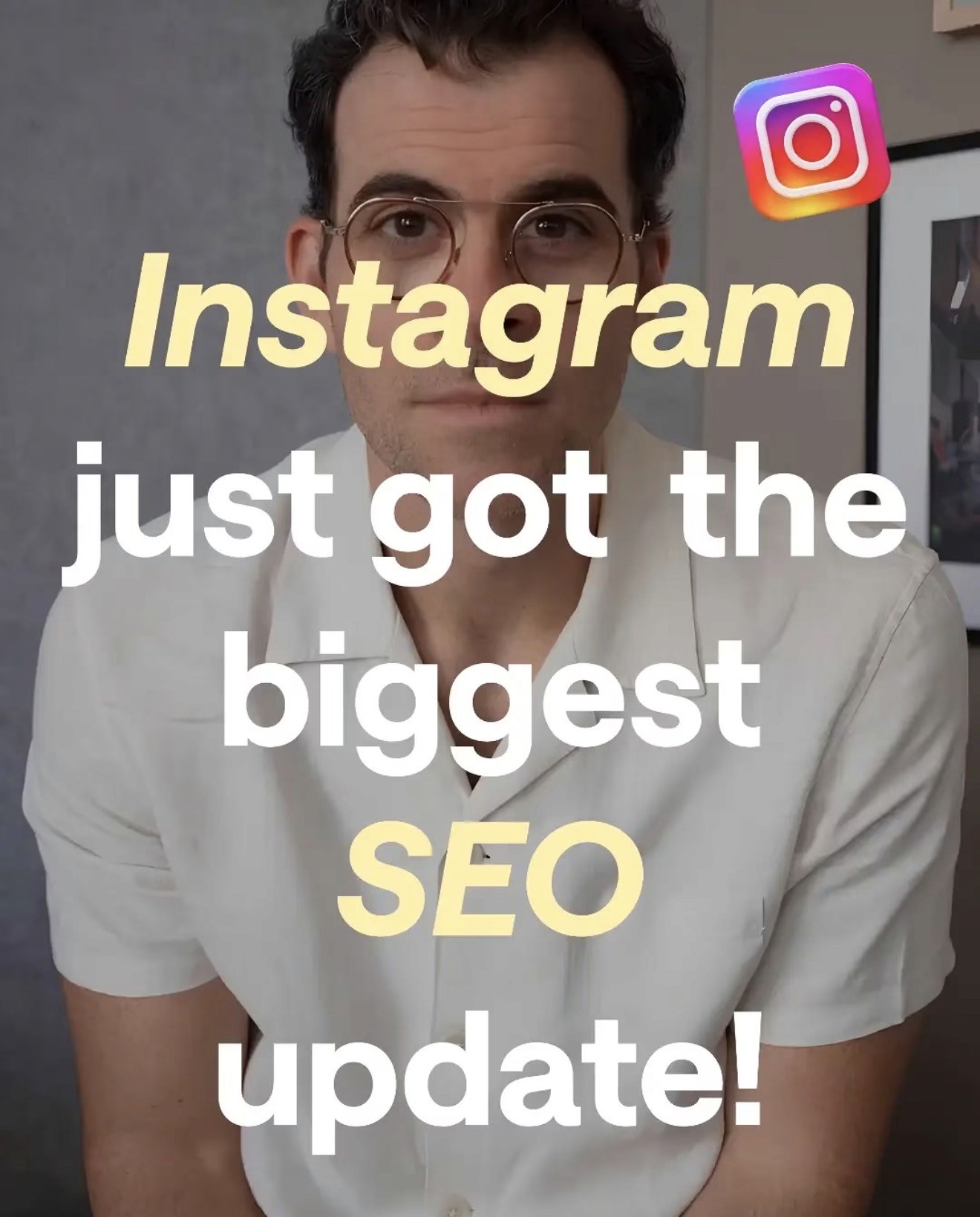
Instagram posts can now appear in Google
One of the most significant changes is that eligible public content from professional Instagram accounts can now be indexed by external search engines.
In practical terms, a Reel, carousel or image post could appear in Google results alongside a gallery website, press article or exhibition listing.
This gives every public post a potentially much longer life. It also means captions written only for existing followers are a missed opportunity.
A caption that simply says “Now open” tells a search engine, and anyone discovering the post out of context, almost nothing. Include the artist’s name, exhibition title, location, dates and subject in natural language.
It does not need to sound robotic. It just needs to be clear.
Social media supports SEO, but it does not replace it
It is worth being precise here. Likes and followers are not a shortcut to the top of Google, and a viral Reel will not fix a badly structured website.
Social media contributes in other ways. It introduces a brand to new audiences, encourages branded searches, sends visitors to the website and increases the likelihood of content being mentioned, shared or linked elsewhere.
Google’s own SEO guidance includes social media promotion and community engagement as ways to help interested audiences, and search engines, discover new content.
The website remains the most reliable home for accurate, structured information. Social media widens the number of routes people can take to reach it.
What this means for arts organisations
The good news is that this does not require captions stuffed with awkward keywords. In fact, keyword stuffing is exactly what Google advises against.
It means being more intentional about the information already being shared:
Include full artist names, exhibition titles, locations and dates.
Use the language someone might naturally enter into a search bar.
Add useful on-screen text and subtitles to video.
Write descriptive alt text for images.
Make profile names and biographies clear about who you are and what you do.
Keep important information consistent across your website and social accounts.
Link to a dedicated webpage where visitors can find the full details.
For galleries and museums, this is particularly important because so much of the content is visual. A beautiful installation image may stop someone scrolling, but the accompanying language helps both people and search engines understand what they are looking at.
Clarity is the new optimisation
The changing face of SEO is not really about chasing another algorithm. It is about recognising that people now discover culture in many different places.
Your website, Instagram captions, Reels, exhibition listings, press coverage and videos all contribute to the same digital picture. They should be treated as connected parts of one discoverability strategy, not separate channels competing for attention.
The organisations that benefit will be the ones that communicate clearly, publish genuinely useful content and make it easy for audiences to move from curiosity to understanding.
Cassandra Bowes
Founder, The Social Art Agency

Let’s keep in touch.
Discover more about high-performance web design. Follow us on Twitter and Instagram.