

From new Instagram tools to the cultural accounts outperforming the rest, here are the summer social media updates and trends you need to know.
The Bayeux Tapestry has arrived at the British Museum for its first return to Britain in nearly 1,000 years, tickets have been disappearing at speed and the story has been difficult to miss online.
But what caught my attention was not only the scale of the exhibition. It was the way the conversation grew beyond the museum’s own channels.
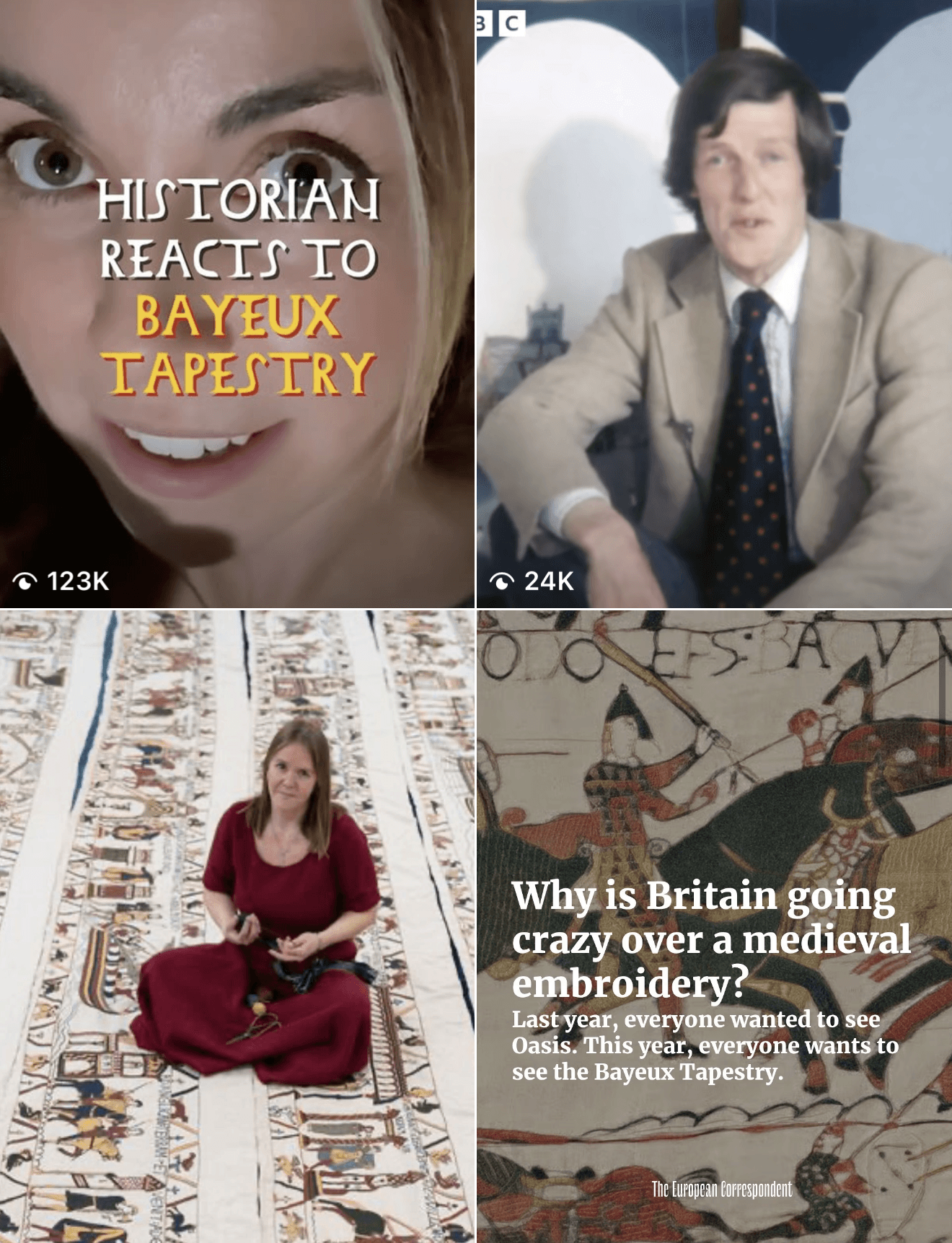
Social media interest built well before the exhibition opened. Publishers, historians, creators and travel accounts all began telling the story in their own way, often generating more engagement than the museum itself.
The British Museum also understood the value of using a recognisable personality. A short Reel featuring Claudia Winkleman made a 950-year-old embroidery feel immediately accessible, while publishing it as a collaborative post helped it reach several audiences at once.
Meanwhile, third-party accounts repackaged the news using existing footage and simple, direct storytelling. One travel account, @uk.explores, attracted more likes and shares than the museum’s own post.
It is a useful reminder that institutions are no longer the sole authors of their cultural moments. If a story is interesting enough, people will interpret, share and distribute it with or without the organisation.
There has since been an interesting development. The British Museum has banned photography in front of the Bayeux Tapestry, reversing its initial position.
From a social media perspective, the decision limits one of the most valuable forms of organic promotion: visitors documenting and sharing their own experience.
That does not necessarily make the exhibition less social, but it does mean the museum’s owned content has to work harder. When photography is restricted, institutions need to provide strong official imagery, video and accessible digital assets that visitors, press and creators can readily share.
Tagged posts can now join your main grid
Instagram’s other notable September update made a splash online and received hugely positive feedback. Posts in which an account has been tagged can now be added directly to the main profile grid rather than remaining hidden within the Tagged tab.
For galleries, museums and arts organisations, this creates an easier way to surface content from artists, curators, partners, press and visitors. It could be particularly useful during exhibitions, fairs and events, when some of the strongest content is being created by people outside the organisation.
It does not replace a collaborative post, which still offers greater shared reach and visibility, but it does give accounts more flexibility in how they curate their profiles.
As always, selectivity matters. Adding a tagged post to the grid should be treated as a curatorial decision, not an administrative one. The content still needs to fit the account’s visual identity, tone and wider story.
The September takeaway
The Bayeux Tapestry illustrates both sides of social participation. Its story became enormous because so many different voices picked it up, yet the photography ban now places more responsibility on the museum to provide the content audiences need.
Cultural organisations cannot completely control how their stories travel online. They can, however, make those stories easier to discover, interpret and share.
Cassandra Bowes
Founder, The Social Art Agency

Let’s keep in touch.
Follow us on Instagram
